Italiano



€4,00
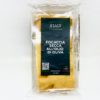
Dry focaccia with olive oil is crispy and a popular variation of the traditional focaccia.
Out of stock
The origins of the focaccia are very ancient; the first ones were already counted at the time of the Phoenicians, Carthaginians and Greeks, using flour of barley, rye and millet baked at the fire; and from the Latin focus derives the etymology of focaccia.
In ancient Rome, focaccia was made available to the gods and in Renaissance times it was eaten together with wine at wedding banquets. Like bread, but richer because of the fat, oil or lard, used for the dough or condiment, in Italy has always been particularly widespread.
Food of travelers and fishermen the focaccia seems to owe its birth also to the long waiting times that bakers had to face during the nights of work, hours deceived by baking directly on the base of the oven pieces of unleavened dough, which once cooked were eaten in company maybe stuffed with vegetables, cold cuts or cheese.
Today, talking about focaccia means running with thought and throat towards the Italian region, creator of true legends: Liguria, which with its countless types of focaccia has established itself on the world gastronomic scene.
In Genoa already in ‘500 the consumption of the simple focaccia with oil was familiar and widespread even in church, especially during weddings. Even a bishop of the time, worried about the rooting of the habit, went so far as to prohibit its consumption during funeral services.
| Weight | 0,11 kg |
|---|---|
| Region of origin | Liguria |
| producer | GRISSITALY S.R.L. |
| Zona di produzione / lavorazione | CARCARE (SV) |
| packaging | 150 gr |
| Main ingredients | soft WHEAT flour type "00", olive oil, brewer's yeast, salt, BARLEY malt |
| appearance | dry, thin and crunchy focaccia on the palate |
| color | amber, yellow ochre |
| smell | MAY CONTAIN TRACES OF SESAME |
| Taste | crunchy and tasty |
| allergens | WHEAT, BARLEY |
| conservation method | STORE IN A COOL AND DRY PLACE, PROTECTED FROM HEAT SOURCES |
| designation | Tq.I.P. |
| Recommended pairings | can be enjoyed at any time of the day, but also during the most important meals of the day as they can be lunch or dinner. |
| Notes | MAY CONTAIN TRACES OF SESAME |
| Expiration date | 15/11/2022 |
| smaltimento | Plastic packaging and paper label; packaging in the plastic collection and label in the paper collection. |
Nutritional values
NUTRITIONAL VALUES PER 100 G:
ENERGY VALUE 1817 kJ / 433 kcal
PROTEINS 10,5 g
FATS 9,4 g of which saturated fatty acids 1,7 g
CARBOHYDRATES 73,5 g of which sugars 1,2 g
SALT 1, 6 g
FIBERS 6,2 g
The producer
Grissitaly, is a reality present in the Valbormidese territory. It is based on the ten-year experience of its owner Marco in the bread-making sector. This small company deals mainly with the production and sale of breadsticks and dry focaccia in total respect of the most ancient traditions of Liguria and Piedmont.
Tradition, experience, craftsmanship and a scrupulous selection of raw materials allow them to guarantee their customers high quality products.
They do not use any kind of preservatives or chemical additives in their recipes, which is why their products expire every six months in order to always offer a fresh and genuine product.
Marco and his collaborators put all their dedication and commitment to create a product linked to traditions and with healthy ingredients.
Production area
Grissitaly is located in Carcare, which is a small town in the province of Savona. According to most sources, the origin of this town is Roman, and the first name with which it is mentioned is Bugile, which was also the first inhabited district within the town. At the end of the tenth century A.D., this village was also mentioned in two documents signed by Emperor Otto III in which rights over various Valbormidesi localities were ceded to the Bishop of Savona.
The historical events regarding the various dominations that have followed one another in the course of history have been alternating and troubled: the dominion of the Del Carretto family (and for a short time that of the Scarampi family) was followed by the Spanish domination, then the passage to the Republic of Genoa and then to the Ligurian Republic; after the Napoleonic domination and the annexation to the French Empire Carcare entered the Kingdom of the House of Savoy and then finally the Kingdom of Italy.
An important and fundamental role for about 400 years has been played by the Collegio Calasanzio, which today, in the same building as it was then, has been transformed into a high school that is considered to be among the most renowned in Italy. It is also nationally recognised for the illustrious students and cultural figures that have passed through its doors.
At the beginning of the twentieth century, when the second industrial revolution took place, some important companies settled in this area too, making a strong contribution to the local economy.
In ancient times, the territory of the municipality of Carcare was divided into four areas:
- “Il borgo di qua” (also called “Plodio”).
- “Il borgo di là” (also called “Roma”).
- The villas and the lower part of Pallare.
- The hamlets of Vispa-Carpaneto.
Finally, it is important to mention the mild and pleasantly breezy climate that characterises this place, which has enabled the village to become a fixed holiday destination for many people. In addition to the climate, four events were held each year that attracted many tourists thanks to their beauty: the first was the fair organised on 24 June to celebrate the patron saint of the village (St John the Baptist), the second at the end of August was held in San Giovanni del Monte, the last two fairs are no longer held but were in honour of Our Lady of the Snow and St Michael the Archangel.
Related products