
 Italiano

Btaly On Tour, what to eat in...
3- ANCONA – BTALY on TOUR: Ancona’s traditional dishes.

Jun
Btaly On Tour : Ancona Cuisine
Ancona cuisine is a variant of Marche cuisine, widespread not only in Ancona but also throughout the Conero promontory.
Btaly On tour wants to give the opportunity to introduce people visiting this extraordinary province to the recipes and typical dishes that have been handed down from generation to generation.
HERE’S WHAT TO EAT IN ANCONA AND PROVINCE!
- Porchetted Rabbit:
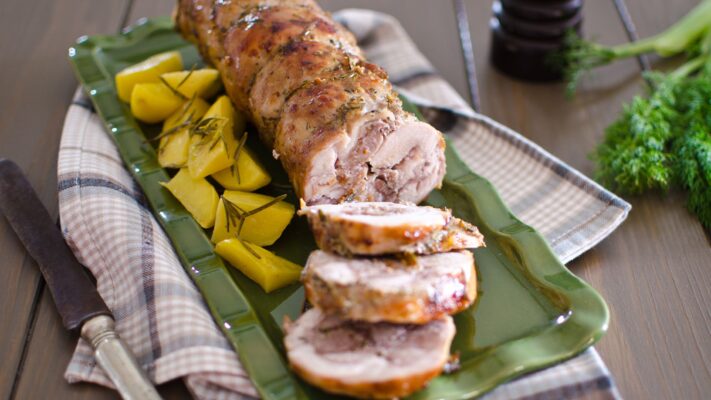
Source of the photo: agrodolce.it
Juicy and genuine, porchettato rabbit is certainly among the most traditional dishes of the Ancona area, the cuisine of this land preserves the oldest and most popular recipes.
Inland Marche cuisine has its roots in the rural civilization once dominated by sharecroppers and peasants. The central figure in that agricultural society was the housewife vergara, who took care of all the housework. This figure over the years developed simple, “massive” dishes that presented a clever use of what was available in the house.
First courses consisted mainly of vegetable and bean soups while homemade pasta was reserved only for feasts. While as for main courses, they were almost all prepared with white meat from chicken. In fact, white meat is very common in Marche cuisine, especially chicken and rabbit, and it is interpreted in various traditional recipes: the typical potacchio (cooked in a pan with tomato sauce), with olives or with onions (in Offida), up to the extraordinary porchettato rabbit.
The “in porchetta” preparation common in other parts of central Italy usually refers to roast suckling pig, stuffed with spices and wild fennel. While recipes that used pork were considered the “dish of the nobles” in the ancient Marche countryside, the “vergare” (women who took care of household chores) strived to cook dishes similar to those of the nobles but using less expensive and more readily available ingredients. Thus, they stuffed rabbit using browned giblets (liver, heart, lungs), pork rinds (if available) and fennel. This herb, which grows wild even at roadsides, is very present in the Marche region, and for this reason many recipes within them feature this “spice.”
Porchetted rabbit: a Marche tradition!
| Cooking time: 35 min | Cost: Low |
| Total time: 50 min | Portions: 6 Servings |
Ingredients
- 1 cleaned and deboned whole rabbit with its giblets
- 1 onion
- 15 slices of taut bacon
- 1 celery rib
- 1 carrot
- 2 cloves of garlic
- 3 sausages
- 1 egg
- 50 g pecorino cheese
- 2 tablespoons of extra virgin olive oil
- A bunch of herbs (thyme, rosemary, sage, parsley)
- Wild fennel
- 1 glass of white wine
- salt
- pepper
PREPARATION:
To prepare this typical Ancona recipe, rabbit in porchetta, you need to lay the rabbit between two sheets of baking paper and, helping yourself with a meat tenderizer, make it an even thickness.
Chop the garlic, add 3 sprigs of fennel, some sage and rosemary. Spread the previously prepared spices over the rabbit, season with a drizzle of oil, a little salt and some pepper, and leave the meat to rest for a few minutes.
At this point you can add the shelled sausage to the mixture, not forgetting to add a little fennel.
Fold the ends of the rabbit inward to collect all the “marinade” inside then roll the rabbit in the roast and tie it with a single loop of kitchen twine.
Place the rabbit in a greased baking dish, season with salt and pepper, bake in the oven at 200°C for 30-35 minutes, deglaze with a little white wine halfway through cooking and about 10 minutes from the end of cooking.
Finally, to make the dish even more delicious and intriguing you can serve it with baked potatoes.
Enjoy!
2. Ragged herbs

Source of the photo: ricette di campagna di raffa
Straginate field herbs are mixed field herbs (beets, escarole, grispigni, grugni, radishes, spinach, hare’s ears, poppies…) boiled with potatoes (optional) and then sauteed with oil, garlic and chili pepper.
One cannot imagine their genuine flavor and the satisfaction of returning home after a nice walk in the countryside and preparing dinner without having to go to the supermarket to buy ingredients.
The term “Stragine” comes from the typical local dialect and means frying.
In Ancona these herbs as well as harvested can be found at the central market at a reasonable price, on average costing about 3 euros per kilo. So just to be rinsed, boiled and put in the pot.
It is not easy if you want to harvest to distinguish the various herbs and can also be dangerous if you do not know the details and characteristics of each one.
Within this dish that can be used as a side dish for main courses or to stuff piadinas are herbs with very different tastes and flavors that put together have a harmonious and good taste.
For example, chicory is quite bitter while chard balances this flavor with its sweetness. Grunts, on the other hand, are somewhere in between.
Straginate herbs: a quick and inexpensive meal!
| Cooking time: None | Cost: Low |
| Total time: 10 min | Portions: 4 Servings |
Ingredienti
- 500 g of mixed field grasses
- 1 Potato (medium)
- Extra virgin olive oil
- Chili pepper
- Salt (if needed)
PREPARATION:
The first step in preparing this recipe is to clean the field grasses by removing the outer and spoiled leaves. It is essential to wash them very well in plenty of salted water before cooking.
Next, sauté the herbs over medium-high heat and from time to time check the degree of cooking especially of the tougher leaves that could be chard, grunts and chicory.
Drain everything well and start steaming a peeled and shredded potato.
Prepare in a frying pan, appropriate for the amount of herbs, the oil over which you are going to sauté a crushed clove of poached garlic and a cracked red pepper.
Finally, add the vegetables making sure to drain them well with the potato; place the herbs mixed with the mashed or chopped potato in the pan and cook, stirring, for about 10 minutes.
Serve the straginate field herbs while still hot.
Enjoy!
3. Cheese pizza:

Source of the photo:
No self-respecting Easter in the Marche region, and especially in Ancona, is complete without the typical cheese pizza, accompanied, of course, by Fabriano salami, which in those months finishes its seasoning and is ready to be assoparated.
It is known and called pizza but looks more like a soft cake or a savory panettone with eggs and cheese.
The “pizza cascio e oe” or “crescia brusca” as it is called in some areas of Le Marche, is a soft and mouth-watering savory preparation that is part of the traditional recipes of Le Marche. And one that deserves to be known beyond the region’s borders.
It is also famous in some areas of the Marche as “pizza cascio e oe” or “crescia brusca”; this dish deserves to be known outside this region as well. The term “crescia” according to tradition refers to the leavening process of the preparation, which is one of its characteristics. Due to the long leavening process, the dough is very soft which makes it resemble a kind of savory panettone.
Cheese pizza: a soft and mouthwatering cake!
| Cooking time: 60 min | Cost: medium |
| Total time: 260 min | Portions: 4 Servings |
Ingredients
- 4 eggs
- 150 ml milk
- 3 tablespoons Extra virgin olive oil
- 100 g Parmesan cheese (grated)
- 100 g pecorino cheese (grated)
- 500 g 00 flour
- 1 sachet Dry yeast (or one cube of fresh)
- 2 teaspoons Salt
- 1 teaspoon Sugar
- 1 teaspoon nutmeg
- 100 g pecorino cheese (cubed)
- 1 teaspoon Black pepper
PREPARATION:
The first step to prepare “Pizza di Formaggio Marchigiana,” start by putting the (broken) eggs in a very large container.
At this point, add milk and oil to the container and then mix the whole mixture with a whisk or fork.
Next, add dry brewer’s yeast and flour to the previously used ingredients. Mix with your hands until well blended and then add salt, sugar, nutmeg and pepper.
At the end, mix in pecorino cheese and grated cheese; when all the ingredients are well combined and you have a single dough, leave it to rise for at least two hours or at least until it doubles in the bowl in a warm, moist environment.
When the resting time is over, place the dough on the baking sheet where it will then be baked. Cut the fresh pecorino cheese into small pieces or strips and put it into the dough vertically in different areas. During baking it will melt and create the characteristic holes in our Marche cheese pizza.
Next let it rise for at least another couple of hours, after which you can proceed to baking. The last step is to bake the cheese pizza at about 160° for an hour in a ventilated oven. When the baking is finished, it is ready to be eaten.
Enjoy!
4. Stoccafisso all’anconetana:

Source of the photo: la cucina italiana
Stoccafisso all’Anconetana is an ancient dish that has been cooked, eaten and loved in the city of Ancona for more than 500 years; the municipality has now even created an academy in honor of this dish that has now become an institution for the inhabitants of the Marche province.
Stoccafisso is a fish with very ancient origins and reigns supreme on the tables of the people of Ancona. In fact, it is believed that this fish, which lives mainly in the Baltic Sea, arrived in this region thanks to some merchants who bartered their spices and cloth, with a cargo of this delicious fish.
There are many different recipes for cooking stockfish today, but there is only one traditional one. In fact, the dish has so proudly preserved its original recipe that it is not uncommon for it to be passed down from generation to generation by loving grandmothers and mothers.
It is still so widely used this recipe because the ingredients needed to prepare it are very easy to find and also quite inexpensive.
Stoccafisso all’anconetana: the king of Ancona’s tables!
| Cooking time: 200 min | Cost: medium |
| Total time: 400 min | Portions: 4 servings |
Ingredients
- 1 kg of already soaked stockfish
- 80-100 g of salted anchovies
- 500 g of potatoes
- 400 g of red tomatoes
- 15 cl about dry white wine
- 60 g of pitted black olives
- 1 teaspoon of white vinegar
- 50 g of chopped parsley
- 2 cloves of garlic
- 1 onion
- 1 sprig of rosemary
- 4 ml of oil
- salt
- pepper
PREPARATION:
Drain, dry, cut stockfish into medium-sized pieces, collect in a bowl, cover with milk and marinate for 2-3 hours.
Prepare a mixture of onion, garlic, parsley, rosemary and desalted, boneless anchovies. In a bowl emulsify oil, vinegar, a pinch of salt and pepper, add the aromatic mixture and set aside.
In a casserole dish lay the first layer of dried fish with skin side down, drizzle with a little oil, a few olives and tomato puree, a pinch of salt, pepper, etc.
Peel the potatoes, cut them into wedges, spread them over the stockfish , add a glass of white wine to fade and a little more oil.
Put the pot on the stove and cook over high heat for about 20 minutes, then reduce to as low as possible and continue cooking for about 3 hours. Toward the end of cooking, remove the lid. Remove from the heat, cover the pot with a sheet of paper towels and let it rest for about 20 minutes. Then, without stirring, serve.
Enjoy!
5. Ragusa in porchetta:

Source of the photo: farina 00
Ragusa in porchetta is a dish prepared in Ancona and is usually served as an appetizer, but can also be enjoyed as a main course.
Ancona tradition suggests bringing ragusa in porchetta to the table or having a picnic with them on the days of May 1 and May 4 on the occasion of the patronal festivals dedicated to St. Ciriaco.
Ragusa in porchetta is very appetizing, which is why it is very easy for the classic “one pulls the other” to happen and it is easy to risk eating too many.They are usually served with homemade bread and dipped in a delicious typical sauce.
In addition to bread to make the scarpetta, raguse in porchetta also require the accompaniment of a good table wine preferably from the Marche region or Btaly‘s nascetta is also perfect.
Raguse in porchetta: the typical dish of San Ciriaco!
| Cooking time: 90 min | Cost: medium |
| Total time: 120 min | Portions: 4 servings |
Ingredients
- 1 kg of raguse
- 1 onion
- 1 bay leaf
- 40 g extra virgin olive oil
- 1 bunch of wild fennel
- 1 chili pepper
- 1 clove garlic
- 80 gdry white wine
- 400 g tomato puree
- 200 g cooking water
- Salt
- Black pepper
PREPARATION:
The first step is to clean the stingrays well, let them soak in a container with cold water, to which you need to add a tablespoon of salt, for at least half an hour.
After that, wash them again until the water used becomes clean and finally rinse them one by one under tap water.
At this point, put the ragusae in a large pot and immerse them in cold water. Add a little salt, a small onion and a bay leaf and boil everything for about 30 minutes.
Next, drain the ragusa and be sure not to throw away the cooking water but leave it aside.
Meanwhile, start by putting plenty of oil, chopped wild fennel, a little chili pepper and a clove of garlic in a fairly large frying pan.
Put the pan on the heat and when the fennel is wilted add the ragusa. Deglaze with a glass of wine and white and evaporate over high heat.
While the raguse are cooking do not forget to stir and add the tomato sauce and cooking water.
Finally, let them cook slowly over a gentle flame for about an hour. Stir occasionally and check that the tomato sauce and water do not get too dry, if this happens you can make up for it by pouring in more cooking water.
Enjoy!
This dish can also be prepared the day before and will turn out even tastier.
6. Polish anconetana:

Source of the photo: la cucina italiana
The “fortified croissant” filled with almond paste and frosted is found only in Ancona and is called Polacca. In the old local bakeries it is still made according to the traditional original dating back to World War II, preferred by the Polish soldiers present in Ancona during that historical period.
Ancona is a seaside city , its port faces the Adriatic Sea and is the starting point of ferries to Croatia, Albania and Greece, on the boats it is typical to serve this cake together with cappuccino.
No codified recipe has been found and today the term Polacca is also used to refer to the classic croissants found in all cafes or pastry shops.
These croissants are covered with a light sugar glaze with a layer of almond paste inside. The dough is different from regular brioche; it is firmer although flaking is equally present.
Not to be confused with Aversana polacca: the Campania dessert is made with two slices of brioche dough filled with custard and black cherries in syrup. The history of this Ancona polacca is actually more recent, dating back to the late 1940s. “Polacca are definitely bigger than a classic croissant,” explains Maurizio Gioacchini, a food and wine expert and keeper of the historical memory of typical Ancona pastries. It was the taste of the Nordic army that prompted bakers to put icing on brioche. Basically, over the years each pastry chef or baker has modified the recipe according to their own taste or needs, and there are no regulations governing the various ingredients.
Ancona’s polacca: the marzipan “Non Brioche”!
| Cooking time: 15 min | Cost: medium |
| Total time: 430 min | Portions: 10 polacche |
Ingredients
FOR THE DOUGH:
- 550 g 00 flour
- 50 g butter (at room temperature)
- 1 sachet dry brewer’s yeast (or one cube of fresh brewer’s yeast)
- 150 ml milk
- 100 g sugar
- 3 egg yolks
- Orange peel
- Lemon peel
FOR THE FILLING:
- 150 g Peeled almonds
- 50 g unpeeled almonds
- 200 g icing sugar
- 2 egg whites
- 3 tablespoons starch (or cornstarch)
FOR GLAZE:
- 1 egg white
- 150 g icing sugar
- 1 lemon wedge
PREPARATION:
The first step in preparing this delicious cake is to beat the egg yolks with the sugar and flour. Now add the crumbled baking powder and lemon and orange zest to the eggs according to your taste. Knead the whole mixture with your hands, adding milk as you go.
Finally, the last ingredient to be included will be the butter. Continue kneading until it is a “smooth” ball, then let the dough rest for about 4 hours.
Preparing the filling
While waiting for the dough to rest for 4 hours, you can start preparing the almond cream that will be inside our polacca.
It is first necessary to toast the almonds in the oven or even just with a saucepan, then place them in a blender and operate it until a crumb has formed; then add the egg whites, powdered sugar and starch to the crumbs and operate the blender again until you see a thick cream.
Preparing the polacas
When the dough has finished rising time, separate it into two parts and roll it out using a rolling pin. Form triangles with the dough and pour two spoonfuls of almond cream on top, after which you can roll and close the triangles.
Once your polacche are ready, cover them with a cloth and let them rise again for at least 2-3 hours. When the polacche are well risen, bake them at 200 degrees for about 15-17 minutes.
Glazing
Finally for the glaze take the last remaining egg white, place it in a bowl with a few drops of lemon and the powdered sugar. Mix it all together with the help of electric whips until frothy and glossy. The last step is to brush this frosting on top of your polacas, and you will be ready to enjoy the traditional Ancona breakfast! Perhaps accompanied with a good coffee or cappuccino!
Enjoy!
7. Ancona chicken potacchio:

Source of the photo: ricette di campagna di Raffa
Chicken in putacchio all’anconetana is a typical recipe from the Marche region and more specifically from the province of ancona; it has a particular but very strong taste thanks to the presence of very simple ingredients such as garlic, rosemary, white wine and tomato puree.
It is necessary to brown the chicken very well in a pan together with the other ingredients: the crushed garlic and rosemary, before adding some tomato puree and then completing the cooking with the lid on.
Chicken in putacchio all’anconetana is very different from stewed chicken because it does not turn out brothy but rather well browned, and at the end of cooking it can be placed in the oven.
Chicken potacchio anconetano: a peasant recipe!
| Cooking time: 50 min | Cost: low |
| Total time: 60 min | Porzioni: 4 servings |
Ingredients
- 1 chicken
- 150 g tomato puree
- 1 onion
- 1 clove of garlic
- Rosemary
- Dry white wine
- Extra virgin olive oil
- Salt
- Pepper
PREPARATION:
For the recipe for chicken in potacchio all’anconetana, the first step is to divide the chicken into 8 pieces. Place about 3 tablespoons of oil in a pot along with the onion and sauté while adding a clove of garlic. At this point, place the chicken in the pot and season with salt and pepper and sauté over high heat for 4 minutes.
Finally, deglaze with half a glass of wine by adding the tomato puree and some rosemary. Let it cook for 45 minutes, checking that the cooking juices do not become too dry: if necessary, sprinkle the meat with a little hot water. At this point the chicken will be ready and you can serve it.
Enjoy!

Source of the photo: ricette della nonna
Vincisgrassi is a typical dish from the Marche region that is said to have been invented in honor of the Austrian general Windisch Graetz, who had done well in the defense of the city of Ancona against Napoleonic troops in 1799.
This tasty pasta dish is very similar to a baked pasta and is made up of several layers; it is topped with grated Parmesan cheese and a special meat sauce made from different types of meat. Vincisgrassi is a very rustic and traditional dish: this is why all families in Ancona have their own recipe that has been handed down from mother to daughter.
Many people add bechamel sauce to vincisgrassi while still others make the pasta by flavoring it with marsala or vincotto. Finally, the more daring ones enrich this dish with rooster crests or giblets.
The version we propose on our blog of vincisgrassi is very simple: fresh lasagna and meat sauce made with beef, pork and chicken giblets (livers, heart and lungs), flavored with pancetta. A sprinkling of grated Parmesan cheese between layers and you have a really tasty and super appealing dish.
Vincisgrassi: the lasagna of Ancona!
| Cooking time: 135 min | Cost: high |
| Total time: 180 min | Portions: 4 servings |
Ingredienti
- 500 g egg lasagna
- 350 g chicken offal
- 1 onion
- 1 carrot
- 1 celery rib
- 300 g tomato puree
- 100 g parmigiano reggiano DOP for grating
- Fine salt
- Black pepper
- Extra virgin olive oil
- 200 g of pork meat
- 200 g of beef
- 100 g bacon
- 200 ml meat stock
PREPARATION:
To prepare the vincisgrassi, start by cutting the bacon into strips and the various cuts of meat into small pieces: the pork, the beef and finally the chicken giblets.
Finely chop the celery, carrot and onion and put them in a saucepan to brown for 5 minutes with extra virgin olive oil along with the bacon. Let everything season for a few minutes then add the beef and pork and cook for about 10 minutes, until the meat reaches a brown color.
Add the passata and season with salt and pepper. Add the chicken giblets to the sauce as well and stir with a wooden spoon; cover with a lid and cook for about an hour and a half, turning occasionally and adding stock if the ragout should dry out. The ragout should be well cooked and thickened.
Once the meat sauce is ready you can assemble the vincisgrassi in a high-sided baking dish: place a few spoonfuls of sauce on the bottom then line the baking dish with a first layer of lasagna (you can use ready-made lasagna or make it by hand) cover with a generous spoonful of meat sauce and a spoonful of grated Parmesan cheese.
Continue in this way until you form at least a dozen layers (this is characteristic of vincisgrassi) and finish with a layer of meat sauce and a generous handful of parmesan. Bake in a hot oven at 180° for 30 minutes and take them out as soon as a nice golden crust has formed on the surface. Serve your vincisgrassi immediately!
Enjoy!