Italiano

€15,00
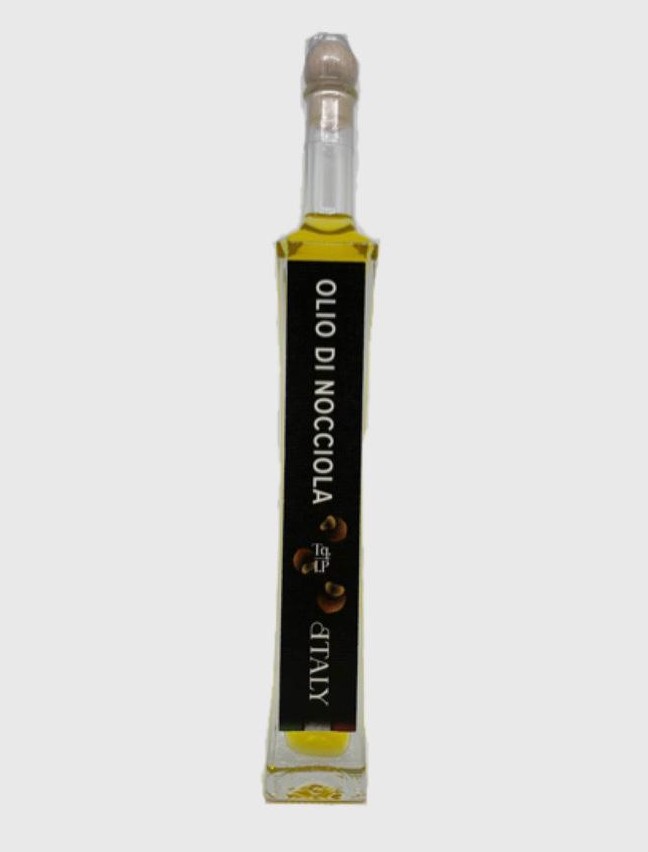
Hazelnut oil is a special and perhaps little-known product. It is extracted from the seeds of the hazelnut, a fruit tree belonging to the betulaceae category known by the scientific name of Corylus avellana.
Out of stock
Hazelnut oil is a special and perhaps little-known product. It is extracted from the seeds of the hazelnut, a fruit tree belonging to the betulaceae category known by the scientific name of Corylus avellana.
It is a plant that grows wild in forests all over Italy; in fact, its tasty fruits, hazelnuts, were already appreciated thousands of years ago in the Bronze Age, and it was here that man began its cultivation.
Hazelnut oil, like olive oil, is extracted by cold mechanical pressing, a process in which the oily part is separated from the creamy part. Thanks to this ‘natural’ process, the oil retains all its organoleptic properties.
The flavour of hazelnut oil is very pleasant and the aroma is delicately fruity. The oil is amber-yellow in colour and is considered a light oil, used both for food purposes and for the preparation of natural cosmetic products.
Its composition is rich in vegetable fats due to the high presence of omega 3, which are useful in preventing cardiovascular diseases and help lower blood cholesterol. A recent study has shown that regular use of hazelnuts and hazelnut oil can lower LDL cholesterol and triglyceride levels.
Hazelnut oil is also rich in vitamin E, a natural antioxidant that fights free radicals, making it particularly suitable for all ages from children to the elderly. Its composition includes a wide range of B vitamins: B6, B1, B2 as well as vitamins A and PP. Hazelnut oil is a source of valuable minerals, including selenium, which has properties that slow down cellular ageing. It is also a good source of calcium, making it an excellent ally for strengthening the skeletal system, hair and nails.
It contains flavonoids, particularly from the polyphenol group, which have an anti-inflammatory, anti-viral and anti-seasonal action. Finally, it contains phytosterols, vegetable substances with a preventive effect on cardiovascular diseases.
In the kitchen, hazelnut oil is particularly sought after in high-class restaurants to add flavour to mixed salads, including fruit salads and crudités in general. Hazelnut oil is also popular in the preparation of desserts, cakes and biscuits, as a much healthier substitute for butter or margarine due to its ability to withstand cooking. It can accompany ice cream, sweet crepes, muesli and mixed fruit in fruit salads.
For health, it can regenerate cells and stimulate circulation. Used daily in the diet, it is nutritious, remineralising and energising, and is therefore also recommended during periods of fatigue and convalescence.
In the field of beauty and natural cosmetics, hazelnut oil is used directly for facial skin care as it is gentle, nourishing and regenerating for the skin cells, and also moisturising for the whole body. Direct treatment can also be applied in cases of skin irritation, on sensitive and dry skin, in cases of eczema and erythema, even in children; this is due to its composition, which has anti-inflammatory properties and succeeds in giving flexibility and elasticity to the skin even after just a few applications of topical use. An excellent characteristic of hazelnut oil is its penetrability, which is very rapid and goes deep enough to act on wrinkles, stretch marks and scars; this characteristic is used in cosmetic treatments, including it as an essential ingredient in creams and lotions for the face and body. For those prone to acne, hazelnut oil comes to the rescue because it is able to regulate sebum secretion in the oilier areas of the face, it unblocks the pores and thus eliminates the formation of blackheads, and finally it has an astringent and toning action that permanently rebalances the skin. Using the oil as a lotion on the hair through packs lasting at least 30 minutes helps to restore tone to the hair fibre and also purifies the scalp. In addition to being quickly absorbed, hazelnut oil has another advantage: it is non-greasy. This allows it to be used advantageously as a base for massage oil and as a night cream to be kept throughout the sleeping hours and to wake up with a fabulous and more toned skin.
| Weight | 0,20 kg |
|---|---|
| Region of origin | Piedmont |
| producer | NoccioleNatura |
| Zona di produzione / lavorazione | Castino (CN) |
| packaging | 100 ml |
| Main ingredients | NOCCIOLA TONDA GENTILE |
| appearance | yellowish and not very viscous |
| color | yellow – amber |
| smell | intense hazelnut aroma |
| Taste | sweet and engaging taste |
| allergens | PIEDMONT HAZELNUT I.G.P. |
| conservation method | avoid leaving the bottle open for long periods, don’t store in areas exposed to the sun or to sudden changes in temperature. |
| designation | Tq.I.P. |
| Recommended pairings | excellent for sauces, salads and meats, also highly recommended in confectionery. |
| Notes | cold pressing |
| Expiration date | 21/10/2022 |
| smaltimento | Glass bottle with cork stopper; glass and cork bottle collected wet. |
Nutritional values
NUTRITIONAL VALUES PER 100 G:
ENERGY VALUE 3404 kJ / 828 kcal
PROTEINS 0 g
FATS 100 g of which saturated fatty acids 7,4 g
CARBOHYDRATES 0 g of which sugars 0 g
SALT 0 g
VITAMINS E 47,2 g
The producer
The farm “NoccioleNatura” was born from the idea of a family strongly linked to its peasant origins with a deep connection to its territory “Le Langhe” and the centuries-old tradition of hazelnut cultivation.
An experience handed down from three generations, up to two young married couples, Massimo and Nicoletta who, with the desire to renew themselves, have chosen to continue along this path and maintain their traditions; this activity is aimed at processing this extraordinary fruit of agro-food excellence, and selling it directly to the final consumer.
Here at NoccioleNatura, hazelnuts are always processed with passion, care and respect for the environment, with the ultimate aim of offering consumers the highest quality, natural and zero-kilometre products.
Their philosophy is to guarantee customers a superior raw material and the idea of a traceable and direct supply chain, from the cultivation of the tree to the sale. These ideals are also represented in their logo, which perfectly conveys the idea of a genuine and natural product.
Production area
Castino is a small village situated in the heart of the Piedmontese Langhe. Its origins are very ancient and historical finds dating back to the period of the Roman Empire have even been found which attest to the existence of this small territory. Moreover, some sources mention that the name of this town comes from the name of a famous Roman legionnaire, who was apparently called Castino.
Others claim that the etymology of the name comes from the Latin word ‘castaneum’ due to the presence of numerous woods, still present in the area today. Among the activities carried out, the most important and distinguishing ones are certainly agriculture and zootechnics. The agricultural activity is mainly based on the cultivation of hazelnuts, vineyards, beans and some types of fruit. Today, Castino has about 1250 inhabitants. The town is located in the west of the Piedmont region, on the back of the hill that separates two valleys: the Belbo and the Bormida. Just 5 kilometres away is the town of Cortemilia, also famous for its hazelnuts, where a festival dedicated to this prized dried fruit is celebrated every year. Among the noble families who ruled this territory throughout history, it is impossible not to mention the Marquises of Cortemilia, the Guttuari of Asti, the Appiani of Turin and the San Giorgio of Bagnasco.
You may also like…


Related products