Italiano


€8,50
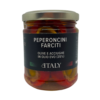
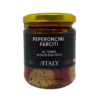
Small artichokes in oil is a preserve characterised by an intense flavour and the tenderness of the flesh which has its roots in ancient times.
Out of stock
The artichoke has very ancient origins, the first evidence of which dates back to prehistoric times. One of the earliest legends about the artichoke is that the nymph Cynara was transformed into a spiny, pointed plant after refusing Jupiter’s courtship.
The first reliable sources on the consumption of artichokes in Italy date back to 1736 in Apulia, when the priests in a seminary in Otranto were served this vegetable. A few years later, in 1773, Abbot Vincenzo Corrado of Oria (Brindisi), wrote a manuscript of recipes in which the artichoke was the main ingredient.
Cultivation, however, began after the Second World War; initially only in some provinces of Apulia, then it began to spread to other parts of Italy.
The artichoke boom came in the mid-1960s; according to the Italian Institute of Statistics, production doubled from 6,500 hectares to more than 14,000.
The artichoke also has very healthy properties, for example, it helps eliminate toxins, promotes diuresis and is an ally of the liver in combating many liver diseases. It is rich in fibre and is a valuable source of potassium and iron salts.
Small artichokes in oil is a preserve characterised by its intense flavour and the tenderness of its flesh, which has its roots in ancient times.
| Weight | 0,2 kg |
|---|---|
| Region of origin | Piedmont |
| producer | Riolfi Sapori S.r.l. |
| Zona di produzione / lavorazione | Castelnuovo Calcea (AT) |
| packaging | 180 g |
| Main ingredients | Whole Italian artichokes 60%, Extra virgin olive oil 38%, VINEGAR, Salt. |
| appearance | Whole artichokes in oil. |
| color | Light green to yellow. |
| smell | Aroma of vegetables and vinegar. |
| Taste | Sweet but at the same time bitter aftertaste. |
| allergens | Vinegar |
| conservation method | Store in a cool, dry place, away from heat sources. After opening, store briefly in the refrigerator at +4°C. |
| designation | Tq.I.P. |
| Recommended pairings | Ideal for aperitifs or as side dishes. |
| Notes | Residues: Acidity corrector, citric acid, antioxidant, ascorbic acid. |
| smaltimento | glass jar with aluminium cap; the metal/aluminium collection cap and the glass collection jar. |
| Expiration date |
Nutritional values
NUTRITIONAL VALUES PER 100 G:
ENERGY VALUE 672 kJ / 163 kcal
PROTEINS 3,0 g
FATS 12,0 g of which saturated fatty acids 2,3 g
CARBOHYDRATES 7,0 g of which sugars 2,9 g
SALT 0,8 g
The producer
From a long family tradition, matured under the sign of love for the most natural and genuine products, RIOLFI sapori was born, an artisan company that, while respecting modern technologies, jealously guards what the earth can offer of precious and irreplaceable for our healthy diet.
The brothers Giorgio and Mauro Riolfi are craftsmen of quality, thanks to their passion matured in years of experience they choose and select the ideal raw materials to create their products: the quality of the fruit and vegetables they use is absolutely guaranteed by repeated and strict controls.
The aim of the company is to satisfy the desires of its customers, who want to taste those products that are not only the tradition of the company but also of the territory that hosts them.
Production area
Castelnuovo Calcea (also called Castelneuv Brusà which means burning castle in Piedmontese) is a very small Italian municipality of only 726 inhabitants in the province of Asti in Piedmont. It is situated on the hills between the Tiglione and Nizza streams, 23 km from Asti and about 9 km from Nizza Monferrato. It has become famous for being the birthplace of the poet Angelo Brofferio in 1802.
Some sources show that Castelnuovo Calcea is a village with very ancient origins. The first inhabitants were the Liguri Statielli, followed by the Celts and the Gauls. The place name is of Roman origin and derives from the union between the name Castrum Novum and that ad calcarias, which is certainly due to the presence of the nearby Roman road that often required backfilling. After the Roman domination, first the Lombards and then the Franks settled here. According to tradition, the original nucleus of the village, which was located on the hill that now houses the cemetery, was burnt down by Frederick Barbarossa. It was later rebuilt in its present location and in the 14th century became a possession of the Guttuari family from Asti. Finally, in the 18th century it changed hands; the Savoys lost control and the village became part of the Duchy of Milan.
Related products