Italiano



€18,00
Nebbiolo d’Alba is undoubtedly one of the best known and most appreciated red wines in Piedmont. Obviously, it is a DOC product, which can only be produced in a specific area: the Langa of Cuneo. It is a red wine with a dry but structured and decisive flavour.
Out of stock
- Description
- Additional information
- The producer
- Production area
- Vinification
- Serving temperature
- Alcohol content
Nebbiolo d’Alba: Piedmont in a glass
Nebbiolo d’Alba is certainly one of the best known and most appreciated red wines in Piedmont. Obviously, it is a DOC product, which can only be produced in a specific area: the Langa of Cuneo. Let’s say that we can consider it almost a brother of Baralo, both are the fruit of Nebbiolo grapes and the ancient name by which Barolo was originally known was precisely Nebbiolo Vecchio.
Sharing the same “paternity”, the stories of the two famous wines are obviously intertwined. The first specific references to Nebbiolo can be found as far back as the Middle Ages, in fact it seems that in the 12th century it was already widespread and appreciated, not only throughout Piedmont but also in the most important courts of the time, in fact it was one of Federico Barbarossa’s favourites.
Like Barolo, its fame grew exponentially over the centuries, not only at home but also in Europe. An important contribution to the cultivation of this grape variety came in the first decades of the 19th century thanks to a great woman, the Marquise Giulia Falletti di Barolo, a noblewoman of the French aristocracy, born Julliet Colbert, who married the Marquis Tancredi Falletti di Barolo, owner of the local estates and land, who, in spite of her lineage, which could allow a woman to lead a life of leisure and idleness, as well as the many charitable works for the sick and destitute that she used to take care of, chose to work and dedicated a large part of her life to the production and promotion of this grape, making a fundamental contribution to its expansion. Alongside her was Camillo Benso Conte di Cavour, who, assisted by the French count and oenologist Louis Oudart, studied how to make dry wine in order to create an important wine in Italy too, “in the fashion of the time like Bordeaux”, which would therefore also be appreciated in foreign courts, a result that was soon achieved not only by the House of Savoy in Turin but also by the other most important European families.
As for the name, even today there is still some uncertainty as to its true origin. Perhaps Nebbiolo derives from nebbia (fog), like the one that envelops the hills when the grapes ripen and it is time to harvest, in fact this vine is late compared to other grapes, bringing the harvest period between the end of October and the beginning of November. For others, however, the name derives from the pruina (bloom), a substance that covers the berries, making them opaque so that they seem enveloped in fog. These theories are supported by an ancient legend handed down orally from generation to generation in farming families, which tells us about the origins of the Piedmontese vine par excellence: “A monk lived in an abbey and was responsible for looking after the vegetable garden and a small vineyard, which was used to produce wine for religious services. The monk was very busy with his agricultural activities, which he carried out with zeal, even at the cost of neglecting meditation and prayer. One fine day, as he left his cell to go to the garden, he saw the vineyard shrouded in thick fog and realised that this was a sign from the Lord, warning him to devote more time to the contemplative life and a little less to those vines. The monk didn’t ask for it twice, he stopped cultivating the land and devoted himself exclusively to his daily prayers, until the time of the grape harvest when the fog finally cleared and settled on the ripe grapes, making them shine like sapphires”.
Nebbiolo is certainly a wine closely linked to its territory, in fact, in order to obtain the right result, the grapes must come from some specific areas of the Langhe and the Tanaro river, in fact, only 25 municipalities can boast its production.
This marvellous wine, with its intense red colour, is still today one of the favourites of connoisseurs with the most refined palates. In fact, thanks to its bouquet, which brings those who taste it back to its land of origin, this red wine “tastes of the Langhe” with olfactory notes ranging from hazelnut to truffle and all the fruits of the local woods.
Nebbiolo is certainly an excellent table wine, thanks to its dry but structured flavour and at the same time it is perfect for enhancing any dish, even an important one, without overpowering its flavours. It goes without saying that it is perfect, given how closely it is linked to its origins and land, with the typical dishes of traditional Piedmontese cuisine.
| Region of origin | Piedmont |
|---|---|
| producer | TENUTA ROCCA |
| Zona di produzione / lavorazione | MONFORTE D'ALBA (CN) |
| Date of production | 2019 |
| Recommended pairings | To enjoy this wine to the fullest, we recommend pairing it with rich meat dishes such as beef, pork and chicken, but it is also excellent with cheeses and cured meats. |
| color | Brilliant, garnet red with good intensity. |
| smell | Ethereal, intense, floral (violet), fruity (plum and raspberry). Spicy notes emerge later. |
| Taste | Dry, warm, full-bodied, rightly tannic, soft and balanced, with remarkable freshness and character. |
| Notes | Contains sulphites |
| designation | DOC – Tq.I.P. |
| conservation method | properly stored away from light, at a cool and constant temperature, in the same horizontal position as in the carton at the time of packaging. |
| packaging | 0,75 L |
| Main ingredients | the grapes undergo a soft pressing. Selected yeasts are added to the must, respecting the aromatic qualities of the product. |
| smaltimento | Glass bottle with cork stopper; glass and cork bottle collected wet. |
The producer
Tenuta Rocca is a beautiful family-run farm nestled in the heart of the Langhe in Monforte d’Alba. The family owns 15 hectares of vineyards surrounding the property.
It is a typical Piedmontese rural farmhouse, the building in fact dates back to the 18th century and has been restored to its former glory over the years, thanks to various conservative architectural interventions.
For the Ciravegna family, wine is an ancient tradition and passion, handed down from generation to generation. Gianni’s great-grandfather, the current head of the family and ‘boss of the estate’, cultivated and lovingly cared for the same vines that still surround the family farmstead today.
The turning point in the family business, towards the modern market, came in 1986 when Gianni and his brother Bruno took over the reins of the business and began a progressive modernisation of the vineyards, the processing stages and the historic cellars.
Over the years, Gianni’s son Andrea, an oenologist with a diploma from the Alba School of Oenology, began to participate and collaborate actively. Thanks to the knowledge acquired during his training, he brought with him great innovations, starting from the cultivation of the vines to the processing and vinification processes. Andrea also has a great love for nature, in fact he is keen to safeguard it and use methods in the various stages of processing that are always as natural and eco-sustainable as possible, so as never to contaminate and ruin that splendid land.
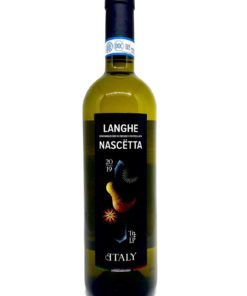
To date, Tenuta Rocca produces 11 varieties of wine in its cellars, all of which are of course indigenous and typical of the great oenological tradition of the Langhe. These include the great reds par excellence such as Barolo and Nebbiolo, but also many whites, among which it is certainly fair to mention Nascetta, a particular local white wine that has been recovered and saved from extinction in recent decades.
At Cantine Tenuta Rocca, the whole family plays a role and collaborates in the cultivation of the vines and in the subsequent steps, ranging from the care of the bunches of grapes to the bottle ready for sale.
Today, at least two generations of Ciravegna work at the winery: the father Gianni and his two children Andrea and Chiara, helped by other precious collaborators such as the saleswoman Elena Clerico who manages the offices, while Edi Karaj and Umberto Viglierchio are fundamental to the cellars and finally the winemakers Jani Karaj and Gabriele Gallo. Everyone here has their own role to play, according to their personal skills, but they are all united in the ultimate goal of offering customers an excellent product, traditional but avant-garde.
We can truly say that here the love for wine and for one’s homeland is something that is transmitted from father to son. Passion for the land, the desire to do as in the past, a pinch of modernity and an eye on the market are the characteristics that create a winning mix that has allowed, over the decades, the Ciravegna family to achieve its current success. In fact, one of their objectives is to make known all over the world the fruits of the earth that they have always cared for and loved with pride.
Production area
Monforte d’Alba is a small town in the Cuneo Langa. Famous for being, together with ten other municipalities in the area, the home of Barolo DOCG, one of the most famous and appreciated Italian red wines.
The history of this village is thousands of years old, its origins are lost in history, it seems in fact that in those lands already in the Neolithic era there were settlements and that this territory was also inhabited at the time of the Roman Empire.
The name of the town, which has early medieval origins, like the castle, derives from the Latin phrase “Mons Fortis”, used to describe the fortified village protected by large walls perched on the hill.
The characteristic ancient village of medieval origin is located on a hill surrounded by splendid Barolo vineyards, declared a UNESCO World Heritage Site on a par with a work of art or an architectural marvel. The village is also included in the list of the “Most Beautiful Villages in Italy”.
Obviously being one of the “home” towns of Barolo, everywhere in the territory there are immense expanses of vineyards and picturesque old cellars, all to be discovered as you venture through the uphill lanes of the village.
Monforte is also home to two of the Big Benches designed by the famous American designer Chris Bangle. For the uninitiated, these are giant, colourful benches set amidst the Langhe’s most beautiful natural landscapes. Sitting on them, you can go back to being a child and marvel at the spectacle that nature offers us.
Vinification
Nebbiolo d’Alba DOC is made from estate-grown grapes from the Nebbiolo vineyard. This vineyard has excellent exposure (south/south-west) on the steep, windy hillside overlooking the Estate’s winemaking cellar.
Thinned out during ripening and selected by hand at harvest, the grapes undergo a soft pressing. Selected yeasts are added to the must in order to respect the aromatic qualities of the product. At the end of temperature-controlled fermentation, racking and decanting take place. Complete malolactic fermentation takes place in stainless steel tanks. During the period of clarification, the wine is placed in oak barrels where it is refined and matured for at least one year. Finally, the wine is prepared for bottling and refinement in the bottle.
Serving temperature
16/18 °C – 61/65 °F
Alcohol content
14,5°
You may also like…




Related products