Italiano



€39,00
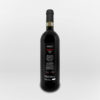
Barolo is an important wine, with its traditional dark but brilliant red colour and its warm, sensual and full-bodied flavour that make it the perfect accompaniment to sophisticated dishes, from the most innovative and experimental to the traditional classics.
8 in stock
- Description
- Additional information
- the producer
- Production area
- Vinification
- Serving temperature
- Alcohol content
The Barolo “vinum regum, rex vinorum”
Barolo is certainly one of the most famous and appreciated Italian wines in the world, the red wine par excellence.
Its history dates back thousands of years, as early as 2500 years ago the people living in the area, such as the Ligurian Starzielli, cultivated vines of this grape, which was also appreciated at the time of the Roman Empire by the great leader and emperor Julius Caesar, who on his return from the Gallic wars fell in love with this wine from the area of Alba Pompeia and decided to take large quantities of it to Rome.
The fruit used to produce this wine is the Nebbiolo grape, already known and appreciated in medieval times under the archaic name of “Nibiol”.
The fame of this product continued to grow exponentially over the years, and in 1751 we know that a case of this wine, already called ‘Barol’, was sent to London where it was a great success, so much so that it even bewitched the young Thomas Jefferson, who was touring Europe at the time, who described it in his diaries as ‘almost as sweet as Bordeaux and as lively as Champagne’. As we can deduce from the words used by the future president of the United States, at that time we were dealing with a different wine from that of today, it was sweet and sparkling, due to the different vinification process and the knowledge of the time that did not allow the transformation of all the sugars contained in the alcohol.
For the birth of Barolo as we know it today we have to wait until 1830 and thank some of the most famous historical figures of the time, including Count Camillo Benso di Cavour (then mayor of Grinzane), the Marquises Falletti (especially a great woman, the Marquise Giulia Falletti di Barolo) and the famous French oenologist Louis Oudart. They succeeded in transforming it, thanks to the new vinification process, into the dry and still wine that we know and love today.
In these years Barolo became so popular that it was appreciated by the King of Italy, Carlo Alberto of Savoy (who also bought land to produce it) and began to be enjoyed in all the great courts of Europe where it became increasingly successful as “vinum regum, rex vinorum”. Therefore, from the beginning of the 20th century, it was necessary to protect the brand name and origin of the wine from fakes.
During the Risorgimento, Barolo even became the wine that symbolised the Unification of Italy, perhaps because it reflected all the characteristics of the Italian people. In fact, it is a “resistant” wine, as is its vine variety, and thanks to its resilience it survived the Great War and the terrible phylloxera epidemic that struck the vines in those years.
In 1927 the “Decree of typical wines” was published in the Official Gazette with the list of territories delimited for the production of Barolo, in fact even today there are only 11 municipalities in the Langa where it is possible to cultivate Nebbiolo grapes and produce Barolo DOCG.
Over the last century, the production of this wine has been refined to the point of arriving at the vinification technique still in use today, which involves 13/14 days of fermentation, two years in wooden barrels and one in the bottle. This speeds up production times and consequently consumption, in favour of the great demand for this wine on the Italian and international markets.
Barolo is an important wine, with its traditional dark but brilliant red colour and its warm, sensual and full-bodied flavour, which make it the perfect accompaniment to sophisticated dishes, from the most innovative and experimental to the traditional classics that share its origins with Barolo.
It is also a fundamental ingredient in the preparation of two cornerstones of Piedmontese gastronomic tradition, braised beef and risotto with Barolo.
| Region of origin | Piedmont |
|---|---|
| producer | TENUTA ROCCA |
| Zona di produzione / lavorazione | MONFORTE D'ALBA (CN) |
| Date of production | 2017 |
| Recommended pairings | Perfect as a table wine with important dishes of roasted red meat, braised meats, game, truffles, hard and mature cheeses. |
| color | Brilliant, garnet red of good intensity, with garnet/orange hints. |
| smell | Ethereal, intense and persistent sensations, with perceptions of violet, cherry, spices (cinnamon, cloves), vanilla, leather. |
| Taste | Dry, warm, full-bodied, robust and rightly tannic, but not too austere, soft, balanced, with persistent and intense retro-olfactory sensations. |
| Notes | Contains sulphites |
| designation | DOCG – Tq.I.P. |
| conservation method | properly stored away from light, at a cool and constant temperature, in the same horizontal position as in the carton at the time of packaging. |
| packaging | 0.75l |
| Main ingredients | the grapes undergo a soft pressing. Selected yeasts are added to the must, respecting the aromatic qualities of the product. |
| smaltimento | Glass bottle with cork stopper; glass and cork bottle collected wet. |
the producer
Tenuta Rocca is a beautiful family-run farm nestled in the heart of the Langhe in Monforte d’Alba. The family owns 15 hectares of vineyards surrounding the property.
It is a typical Piedmontese rural farmhouse, the building in fact dates back to the 18th century and has been restored to its former glory over the years, thanks to various conservative architectural interventions.
For the Ciravegna family, wine is an ancient tradition and passion, handed down from generation to generation. Gianni’s great-grandfather already cultivated and lovingly cared for the same vines that still surround the family farmstead today.
The turning point in the family business, towards the modern market, came in 1986 when Gianni and his brother Bruno took the reins of the business and began a progressive modernisation of the vineyards, the processing stages and the historic cellars.
Over the years, Gianni’s son Andrea, an oenologist with a diploma from the Alba School of Oenology, began to participate and collaborate actively. Thanks to the knowledge acquired during his training, he brought with him great innovations, starting from the cultivation of the vines to the processing and vinification processes. Andrea also has a great love for nature, in fact he is keen to safeguard it and use methods in the various stages of processing that are always as natural and eco-sustainable as possible, so as never to contaminate and ruin that splendid land.
To date, Tenuta Rocca produces 11 varieties of wine in its cellars, all of which are of course indigenous and typical of the great oenological tradition of the Langhe. These include the great reds par excellence such as Barolo and Nebbiolo, but also many whites, among which it is certainly fair to mention Nascetta, a particular local white wine that has been recovered and saved from extinction in recent decades.
At Cantine Tenuta Rocca, the whole family plays a role and collaborates in the cultivation of the vines and in the subsequent steps, ranging from the care of the bunches of grapes to the bottle ready for sale.
Today, at least two generations of Ciravegna work at the winery: the father Gianni and his two children Andrea and Chiara, helped by other precious collaborators such as the saleswoman Elena Clerico, who manages the offices, while Edi Karaj and Umberto Viglierchio are fundamental for the cellars and finally the winemakers Jani Karaj and Gabriele Gallo. Everyone here has their own role to play, according to their personal skills, but they are all united in the ultimate goal of offering customers an excellent product, traditional but avant-garde.
We can truly say that here the love for wine and for one’s homeland is something that is transmitted from father to son. Passion for the land, the desire to do as in the past, a pinch of modernity and an eye on the market are the characteristics that create a winning mix that has allowed, over the decades, the Ciravegna family to achieve its current success. In fact, one of their objectives is to make known all over the world the fruits of the earth that they have always cared for and loved with pride.
Production area
Monforte d’alba is a small town in the Cuneo Langa. Famous for being, together with ten other municipalities in the area, the home of Barolo DOCG, one of the most famous and appreciated Italian red wines.
The history of this village is thousands of years old, its origins are lost in history, it seems in fact that in those lands already in the Neolithic era there were settlements and that this territory was also inhabited at the time of the Roman Empire.
The name of the town, which has early medieval origins, like the castle, derives from the Latin phrase “Mons Fortis”, used to describe the fortified village protected by large walls perched on the hill.
The characteristic ancient village of medieval origin is located on a hill surrounded by splendid Barolo vineyards, declared a UNESCO World Heritage Site on a par with a work of art or an architectural marvel. The village is also included in the list of the “Most Beautiful Villages in Italy”.
Obviously being one of the “home” towns of Barolo, everywhere in the territory there are immense expanses of vineyards and picturesque old cellars, all to be discovered as you venture through the uphill lanes of the village.
Monforte is also home to two of the Big Benches designed by the famous American designer Chris Bangle. For the uninitiated, these are giant, colourful benches set amidst the Langhe’s most beautiful natural landscapes. Sitting on them, you can go back to being a child and marvel at the spectacle that nature offers us.
Vinification
Thinned out during ripening and selected by hand at harvest time, the grapes undergo a soft pressing. Selected yeasts are added to the must, respecting the aromatic qualities of the product. At the end of temperature-controlled fermentation, racking and decanting take place.
The wine remains in oak barrels for at least two years. It is then prepared for bottling and refinement in the bottle for about a year before release, which, according to regulations, may not take place before the 4th year after harvesting.
Serving temperature
16/18 C – 61/65 F
Alcohol content
15°
You may also like…


Related products