
 Italiano

Btaly On Tour, what to eat in...
1- AGRIGENTO – BTALY on TOUR :dishes of the Agrigento tradition

May
Btaly On Tour : Agrigento Cuisine
The cuisine of Agrigento or Agrigentina is as complicated as it is simple, as it connects both the purely maritime territories, such as the Pelagie Islands and the mountain territories, such as the municipalities that extend on the Sicani Mountains, therefore going to the center of Sicily.
The cuisine of Agrigento, in fact, has developed in the coastal area and island a gastronomy of fish while the more you go into it you will find a gastronomy mainly of meat and vegetables.
Btaly On tour wants to give the opportunity to let people who visit this extraordinary province know the recipes and typical dishes that are handed down from generation to generation.
HERE’S WHAT TO EAT IN AGRIGENTO AND PROVINCE!
- THE SOUP OF SAN GIUSEPPE:

Source of the photo: fornelli di sicilia
St. Joseph’s soup is a poor man’s dish typical of Agrigento and its province but it can be found in all Sicilian tables, intrinsically linked to Christianity and to the image of St. Joseph, symbol of humility and poverty. It is a soup made of beans and seasonal vegetables for the poor and it was mainly eaten in occasion of Saint Joseph’s feast on March 19. In most cases, families who received the grace prepared cauldrons of soup to be served to the less well off. St. Joseph’s soup is made with beans and seasonal vegetables, either ready at home or gathered in the fields. Usually it is made with borlotti beans, lentils, chickpeas and field vegetables such as beets, borage, etc. The preferred pasta format is Ditali.
Minestra di San Giuseppe: the soup of the poor!
| Cooking time: 1 h 30 min | Cost: Low |
| Total time: 1 h 30 min | Portions: 4 servings |
Ingredients
- 200 gr dried beans
- 200 gr lentils
- 500 gr mixed vegetables
- 1 celery rib
- 2 carrots
- 1 white onion
- 1 bunch of wild fennel
- 200 gr ditali
- salt and pepper
- extra virgin olive oil
PREPARATION:
In order to prepare St. Josep soup, typical of Agrigento’s cooking, it is necessary the night before, to soak legumes in abundant water and bicarbonate of soda.
The next day, the legumes that had been put aside in abundant water and bicarbonate, are rinsed under running water until the water in which we had the legumes does not become clear, then drain them and put them aside.
Once this procedure has been done, take the “chopped mixture” that is onion, carrot and celery and cut it also coarsely.
All that remains is to make the soffritto with these ingredients.
Once they are well browned, add the legumes they had put aside, cover with a lid and lower the flame to minimum.
In the meantime, start cleaning the vegetables (removing the few parts that will not be of interest to us) and cut them into coarse pieces (the coarser they are the more traditional and genuine the soup will be) – we don’t care so much about aesthetics but about substance!
Once you have done this procedure, which we know is a bit tedious, add them to the pot (better if terracotta) together with the legumes.
Cook for another half hour, stirring from time to time with a RIGOROUSLY wooden spoon.
When the soup is ready, add the mixed pasta and the broken spaghetti and cook it inside the soup.
When the soup is cooked, serve it hot on the table with a drizzle of good Sicilian extra virgin olive oil and black pepper, freshly ground.
2. THE “MACCU RI FAVI SICCHI”:
Source of the photo: casaeputiaristorante
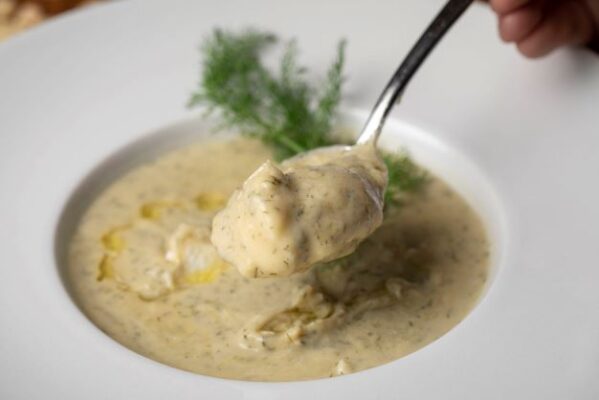
Macco di fave or in Sicilian dialect “Maccu ri favi sicchi” is a traditional soup from Agrigento which has a lot in common with other representative dishes of southern Italy, such as white beans and radicchio from Puglia and Basilicata. Native to Agrigento – in particular to the town of Raffadali, pasta co’ maccu is a typical dish of Saint Joseph’s feast. It seems that in ancient times it was considered the “dish of good omen”, which the landlord offered to all the farmers at the end of harvesting to celebrate the end of the work.
Macco di fave is a poor dish with a creamy consistency, which is obtained by cooking the fava beans for a long time until they are completely melted. This is a healthy and restorative recipe that can be enjoyed all year round, as it can be made with fresh and dried beans. It can be served as a first course or as a main course, especially with pasta and cooked vegetables.
Macco di fave: the original recipe from Agrigento
| Cooking time: 3 h 30 min | Cost: Low |
| Total time: 1 d 3 h | Portions: 4 Servings |
Ingredients:
- 500 gr. dried broad beans
- 1 onion
- 2 carrots
- 1 celery rib
- 1 bunch of wild fennel
- olive oil
- salt
- pepper
PREPARATION:
Clean the broad beans well and leave them in the water for at least two hours.
Cut the carrots and onions into small pieces and finely chop them.
Fry them in abundant oil, adding also a clove of garlic in camicia.
After having waited for at least two hours for the beans, it is necessary to add them to the soffritto being prepared, then remove the garlic clove and cover everything with hot water.
After salting, it is advisable to close with a lid and let it simmer for at least 60 minutes, or until the fava beans begin to melt.
It is important to stir everything frequently and when the water previously added has evaporated, constantly add a drop of hot water in order not to make the soup too dry.
Serve piping hot with a dash of good extra virgin olive oil!
3. ‘U TAGANU:

Source of the photo: siciliainfesta
In Sicilian language, ‘U taganu or tianu di Aragona, is the first dish prepared on Holy Saturday in Aragona, a small town near Agrigento in eastern Sicily. “Taganu” or “tianu” means frying pan in Sicilian, and according to tradition it must be made of terracotta.
This is to simulate the ancient customs that involved the use of clay. The ingredients, in fact, are sealed in earthenware pots which, at the end of cooking, are broken in order to extract the dish. It is said the dish was created by a woman who used all the remains of her larder. From the past derives the word ‘u tiganu. It is a hearty dish of Sicilian enogastronomical tradition, and it is perfect for lunches and dinners of parties such as Easter or Christmas.
‘U TAGANU’: THE TRADITION HANDED DOWN FROM GENERATION TO GENERATION
| Cooking time: 1 h 20 min | Cost: Medium |
| Total time: 1 h 30 min | Portions: 6 Servings |
Ingredients
- 600 grams of mezzemaniche or rigatoni pasta
- a small onion
- Extra virgin olive oil
- 500 grams of minced meat: 40% veal and 60% pork
- ½ glass of white wine
- Chicken broth
- Salt and pepper
- A pinch of cinnamon
- 12 eggs
- 50 grams of grated caciocavallo cheese
- 50 grams of butter
- 50 grams of grated parmesan cheese
- 100 grams of very fine breadcrumbs
- 500 grams of tuma cheese
PREPARATION:
To prepare the Taganu d’Aragona, you must initially chop the onion very fine and fry it in plenty of olive oil. Then add the meat and brown it well.
Add a small glass of red wine and cover everything with hot broth. Season with salt and pepper and, if desired, add a pinch of cinnamon.
Cook for the necessary time until the sauce dries up, possibly with a lid.
In the meantime, boil the water for the pasta in another pot.
Beat the eggs with the caciocavallo cheese and season with salt and pepper, then add half a ladle of broth and set aside.
Start cooking the pasta, leaving it al dente.
Integrate the pasta with the butter, Parmesan cheese and half of the eggs with the caciocavallo cheese. Mix everything well
Add plenty of butter to the bottom and sides of an earthenware pan and submerge in breadcrumbs. Pour into the same earthenware a portion of pasta and cover the first layer of this dish with a mixture of cheese (tuma) and beaten eggs.
The second layer should be formed with meat and more eggs.
Continue with the layers until all the ingredients have been used but trying to keep some tuma for the last layer.
To finish pour in the leftover beaten eggs to cover the edges and gaps well.
Heat the oven to 200° before putting the earthenware container in the oven and bake until the egg reaches the desired consistency; the mixture should be dry and above all nice and firm.
Finally, take the Taganu out of the oven and let it rest for at least 10 minutes.
Turn the Aragon Pan upside down onto the serving plate.
4. SOLE SACCENSE STYLE
Source of the photo: oggi
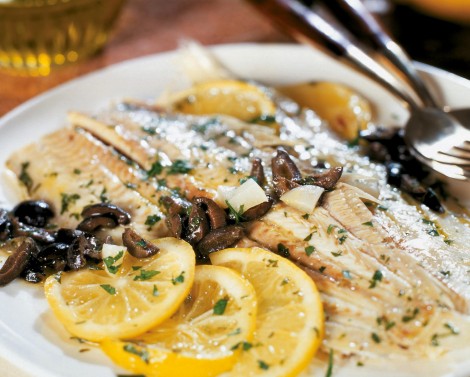
It is a typical dish of the city of Sciacca in the province of Agrigento, the whole culinary culture of this town is characterized by fish recipes, generally for blue fish, it is used the traditional fishing method with the cianciolo, also known as fishing technique “lampara“. In order to prepare this dish, the various fillets must be laid on a bed of fennels and sprinkled with the juice of Sicilian oranges. Finally, to complete the dish it is necessary to add some breadcrumbs, salt and a pinch of oil. Finally it is necessary to add black olives.
SOLE ALLA SACCENSE: FROM THE SEA OF SCIACCA TO THE TABLE!
| Cooking time: 20 min | Cost: Low |
| Total time: 20 min | Portions: 4 Servings |
Ingredients:
- 1 fennel
- 4 fillets of sole
- 2 oranges
- 60 g of breadcrumbs
- Salt
- Extra virgin olive oil
- Black olives
PREPARATION:
The first step in this recipe is to cut the fennel into thin slices and place it on a baking sheet covered with baking paper and oiled.
Next, place the sole fillets on top of the previously cut fennel and add the orange juice.
Also, you should add the breadcrumbs, salt and a drizzle of extra virgin olive oil.
Finally, put a handful of black olives. Bake the sole at 180° C in a ventilated oven for about ten minutes.
5. “THE CUNIGGHIU TO ‘STIMPIRATA
Source of the photo: elisa rizza
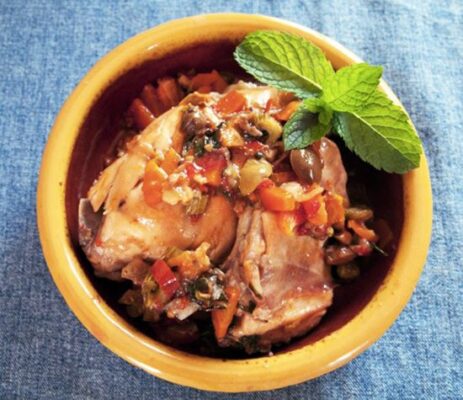
Sweet and sour rabbit, also called cunigghiu a ‘stimpirata (rabbit in sweet and sour sauce), is a second course of Sicilian tradition, especially in the town of Gela. It is a rich meat dish, but not pungent, which exalts one of the best and “hardest” meat: rabbit. Rabbit meat, although smaller, is considered red and therefore equal to beef. On the other hand, its nutritional properties are more similar to this meat than chicken or poultry.
U CUNIGGHIU ‘A STIMPIRATA: THE SWEET AND SOUR SICILIAN RABBIT
| Cooking time: 40 min | Cost: Medium |
| Total time: 6h 40 min | Portions: 4 Servings |
Ingredients:
- Rabbit 1
- Celery 300 g
- Capers 20 g
- Small white onion 1
- Parsley 1 tuft
- Vinegar 2 tablespoons
- Sugar 2 tablespoons
- Extra virgin olive oil
- Flour 00
- Tomato paste 2 tablespoons
- Salt
- Pepper
- Gaeta olives 100 g
- Rosemary 2 sprigs
PREPARATION:
The first step is to clean the rabbit, then cut the meat into small pieces, rinse them with running water and dry them with kitchen paper.
Next, it is necessary to flour the previously cut pieces of rabbit.
Meanwhile, you can start peeling and cleaning the onion, celery, capers. Then put the raisins in a bowl by submerging it in warm water, wash the lemon and grate it and finally dissolve the sugar in vinegar.
Now that the ingredients are ready, you need to start cooking the sweet and sour rabbit.
Pour the floured rabbit into a container with the addition of three tablespoons of olive oil and start frying it on all sides until it becomes golden brown. In the same pan you can add the chopped onions until they become soft and transparent.
Next, you must add the rest of the ingredients, therefore celery, desalted capers, pine nuts, drained raisins, lemon zest and olives.
Stir everything and pour a glass of white wine until it evaporates.
Finally, season with salt and pepper and then add the sweetened vinegar.
Lower the heat and cook the rabbit for an hour until it becomes very tender, checking the cooking all the time stirring and adding water if necessary.
When the rabbit is ready serve hot or warm.
6. THE “STIGGHIOLA”
Source of the photo: blastingnews
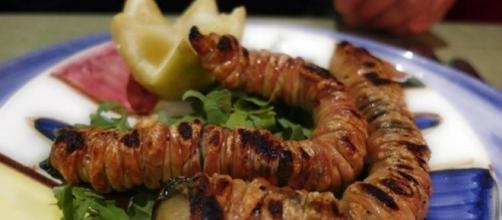
No dish better represents Sicilian street food than the stigghiola, which is prepared, cooked and sold on the street by “‘u stigghiolaru“. The stigghiola has its origins in the poor cuisine and in the recovery of food, and today it is a symbol of the local cuisine. Stigghiola has been included in the list of traditional Italian agricultural products (PAT) by the Ministry of Agriculture and Food. It is made with the intestines of lamb, sheep and kids, which are wrapped with stalks of shallot and parsley for a perfect combination and roasted on a burning brazier. Tables abound in Sicily during Holy Week, when goats and lambs are slaughtered for classic Easter preparations.
STIGGHIOLA: AN ANCIENT FLAVOR
| Cooking time: 10 min | Cost: Low |
| Total time: 10 min | Portions: 5 Servings |
Ingredients:
- 1 kg. fresh lamb intestines
- parsley stalks
- 3 whole leeks
- 1 lemon
- salt and pepper
- extra virgin olive oil
PREPARATION:
The first step in the making of this typical Agrigento dish is the preparation of the stigghiole.
It is necessary to get half a kilo of meat (intestines, guts), clean them and then wrap them around an abundant tuft of parsley. Moreover, it is advisable to add besides the meat also an onion cut into small pieces.
Next, you must put these spirals created with the meat and onion on the grill and cook them for a few minutes.
Add a pinch of salt and flavor with lemon juice, according to tradition stigghiole should be served hot, almost to scald the tongue.
7. ‘U PITAGGIU
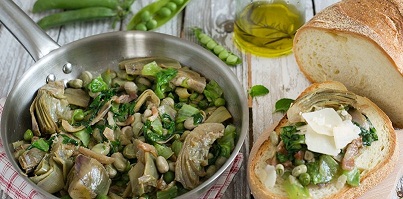
Source of the photo: il siciliano web
In the culinary tradition of Agrigento, as it happens elsewhere in Sicily, are usually prepared specific dishes in occasion of certain recurrences or events of life. In the case of Agrigento tradition has nothing to do with festivals, but only with the use of real local products. This is a traditional dish prepared with simple, genuine and typical ingredients of the Mediterranean cuisine. U pitaggiu is a stew of broad beans, peas and artichokes, excellent as side dish.
HOW GOOD IS LU PITAGGIU
| Cottura: 45 min | Costo: Basso |
| Tempo totale: 45 min | Porzioni: 4 Porzioni |
Ingredienti:
- 1 kg of fresh peas
- 500 gr. of peeled new broad beans
- the heart of 6 artichokes
- 100 g of wild fennel
- 1 onion
- extra virgin olive oil
- salt and pepper
PREPARATION:
The first step in preparing “U Pitaggiu” is to take a container large enough so as to heat the onion and sauté it in plenty of oil and onion.
To ensure that the sauté does not dry out excessively, add a ladleful of vegetable stock.
Next, add to the pan the peas, fresh broad beans well shelled, artichokes cleaned and cut into small pieces with a handful of wild fennel.
Add salt and pepper to taste while cooking.
Simmer, adding a little water as needed, until the dish is ready.
8. MEATBALLS OF SARDINES
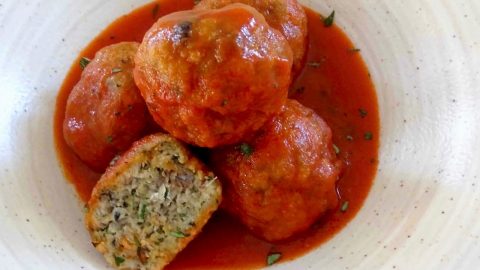
Source of the photo: ilcuoreinpentola
Sardine meatballs are a simple and tasty Sicilian second course, a tasty and succulent recipe made with sardines, breadcrumbs, eggs, pecorino cheese, pine nuts, raisins and chopped parsley. Once you have mixed the ingredients and formed the meatballs, you can serve them simply fried or with sauce, dipping them in tomato sauce: excellent to taste both hot and cold.
SARDINE MEATBALLS: THE MEATBALLS OF AGRIGENTO
| Cooking time: 20 min | Cost: Medium |
| Total time: 45 min | Portions: 16 Meatballs |
Ingredients:
- cleaned sardines: 400 gr
- parsley: 1 tuft
- garlic: 1 clove
- bread: 2 slices
- salt
- grated pecorino cheese: 5-6 tablespoons
- raisins and pine nuts: 2 tablespoons
- egg: 1
- to flour: flour or semolina
- for frying: olive oil
- For the tomato sauce: tomato puree: 500 ml
- garlic: 2 cloves
- chilli pepper
- salt
- olive oil
- mint
PREPARATION:
The first step is to clean the sardines, removing the head, the bone and the dorsal fin (or buy them already cleaned!). Then it is necessary to eviscerate them trying to remove all the bones.
Put the cleaned sardines in a container and add the rest of the ingredients of this recipe, except the flour and oil.
With hands knead and combine everything, so that they break up and mix the sardines as well. If the dough feels a little soft to the touch, add a little breadcrumbs to make it harder.
In the meantime, in a pan, fry the finely chopped garlic needed to prepare the tomato sauce, adding a little chopped mint.
Next, form the meatballs by slowly adding the flour.
At this stage you can choose whether to make the meatballs with fried sardines or with the sauce.
If you prefer the version with sauce, you will only have to quickly fry the meatballs so that they will have a light crust.
For the other version, bring the sauce to a boil and continue cooking for at least fifteen minutes.
Finally, the sardine meatballs according to the traditional recipe should be served warm, but can also be enjoyed cold.
9. CAVATELLI WITH SPINY ARTICHOKES OF MENFI
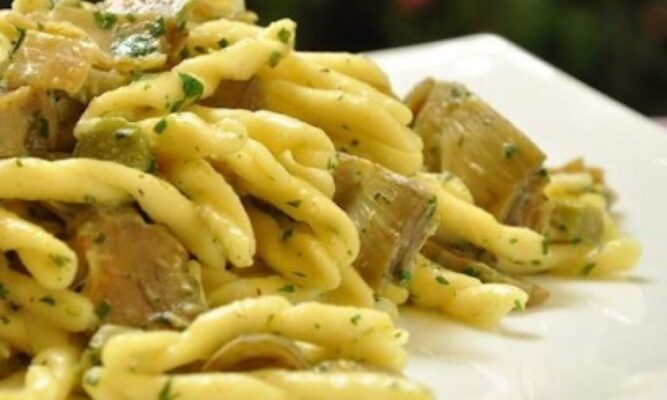
Source of the photo: lagazzettadelmezzogiorno
Cavatelli are a short pasta emblematic of Sicilian cooking, but they are also common in Apulia and Molise, as well as in other regions of southern Italy.
Prepared with simple ingredients (semolina, water and salt), cavatelli are characterized by an elongated shape, concave towards the inside, pressed in the dough by the pressure of fingers. The name probably derives from “cavo” (hollow) and therefore from the operations needed to make them by hand.
The most skilled housewives work with both hands, producing in a short time an amazing number of cavatelli, and it is a sight to see them at work.
Cavatelli is one of the Sunday meals par excellence in Sicily, especially in the area of Agrigento, prepared with love by women and brought to the whole family at the table. Cavatelli are part of the list of traditional Italian food (PAT) and it is celebrated through many summer festivals.
The first witnesses tell that already Frederick II loved this type of short pasta, which was probably born under his reign around 1200. Moreover, it was considered a dish for great occasions, cavatelli were then served in the most prestigious banquets with different types of sauces such as bacon, peas and broad beans. Whereas in Sicily one of the best and most used combinations is with spiny artichokes from Menfi.
CAVATELLI: AN ANCIENT PASTA THAT EVERYONE AGREES ON
| Cooking time: 12 min | Cost: Medium |
| Total time: 30 min | Portions: 4 Servings |
Ingredients:
- 600 g of cavatelli
- 8 spiny artichokes of Menfi
- 1 lemon
- 1 large onion
- thyme
- parsley
- extra virgin olive oil
- water
- salt
- pepper
PREPARATION:
For the preparation of artichokes the first thing to do is to clean them. It is necessary to eliminate the external leaves of the spiny artichoke of Menfi, which are the hardest, clean the stem and shorten the base by cutting off the tips. Leave them in plenty of water with half a cut lemon (so that they do not blacken) Finally, cut the artichokes into thin slices.
The second step is to take care of the onion: you must peel and slice it and then chop it finely. After that, initially fry the onion in plenty of oil, when the onion reaches the right consistency and golden you must add the artichokes, which must brown for a minute, adding finely chopped parsley and thyme, and then you must add a glass of water and salt.
Then cover and cook for about fifteen minutes in order to make the artichokes become very tender. In the meantime it is possible to put on the fire a pot with abundant water which will be used for cooking cavatelli. It is important to cook the pasta al dente, because it will be cooked in the pan with the artichokes.
Finally, mix everything together adding a little more oil, serve hot!
10. SOUP ‘I SICCI
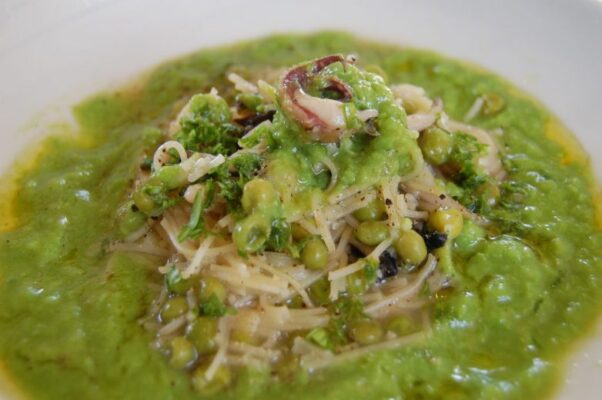
Source of the photo: saporidigirgenti
One of the most delicious and famous dishes of the culinary tradition of Agrigento is the cuttlefish soup called in Sicilian dialect Minestra I Sicci; it is very famous especially in one of the most beautiful seaside towns of the coast: the town of Siculiana.
Especially during the summer period, which starts in April and ends at the end of October, the fishermen of the town of Siculiana Marina fish large quantities of cuttlefish. For this reason was born this first course that precisely has as main ingredient this tasty shellfish!
THE MINESTRA ‘I SICCI: CUTTLEFISH SOUP OF SICULIANA
| Cooking time: 30 min | Cost: Medium |
| Total time: 40 min | Portions: 4 Servings |
Ingredients:
- 1 kg of cuttlefish
- plenty of tender and sweet peas
- 1 medium potato
- 1 onion or spring onion
- vegetable broth
- extra virgin olive oil
- salt and pepper
- parsley
PREPARATION:
The first step for the preparation is to clean the cuttlefish, you must remove the inner bag, eyes, beak and skin (or buy them already cleaned).
After the first step, cut the cuttlefish into strips and cube the tentacles, then fry everything in a pot with fresh spring onion and plenty of olive oil.
Add the peas and cook for a few minutes over medium heat.
Season with salt and pepper.
Add the potatoes and cover with plenty of vegetable stock.
Leave on the heat for a good fifteen minutes.
If one likes, it is possible to add some grated caciocavallo cheese or some tufts of wild fennel to flavor the soup.
Serve the soup hot!
WE JUST HAVE TO CLOSE HERE OUR CULINARY JOURNEY “BTALY ON TOUR” WHERE WE WERE INTRODUCED TO TRADITIONAL DISHES FROM AGRIGENTO! IF YOU LIKED IT YOU JUST HAVE TO COMMENT HERE ON THE BLOG, WE ARE WAITING FOR YOU AND WE GIVE YOU AN APPOINTMENT WITH ANOTHER ARTICLE OF “BTALY ON TOUR”!