€9,20
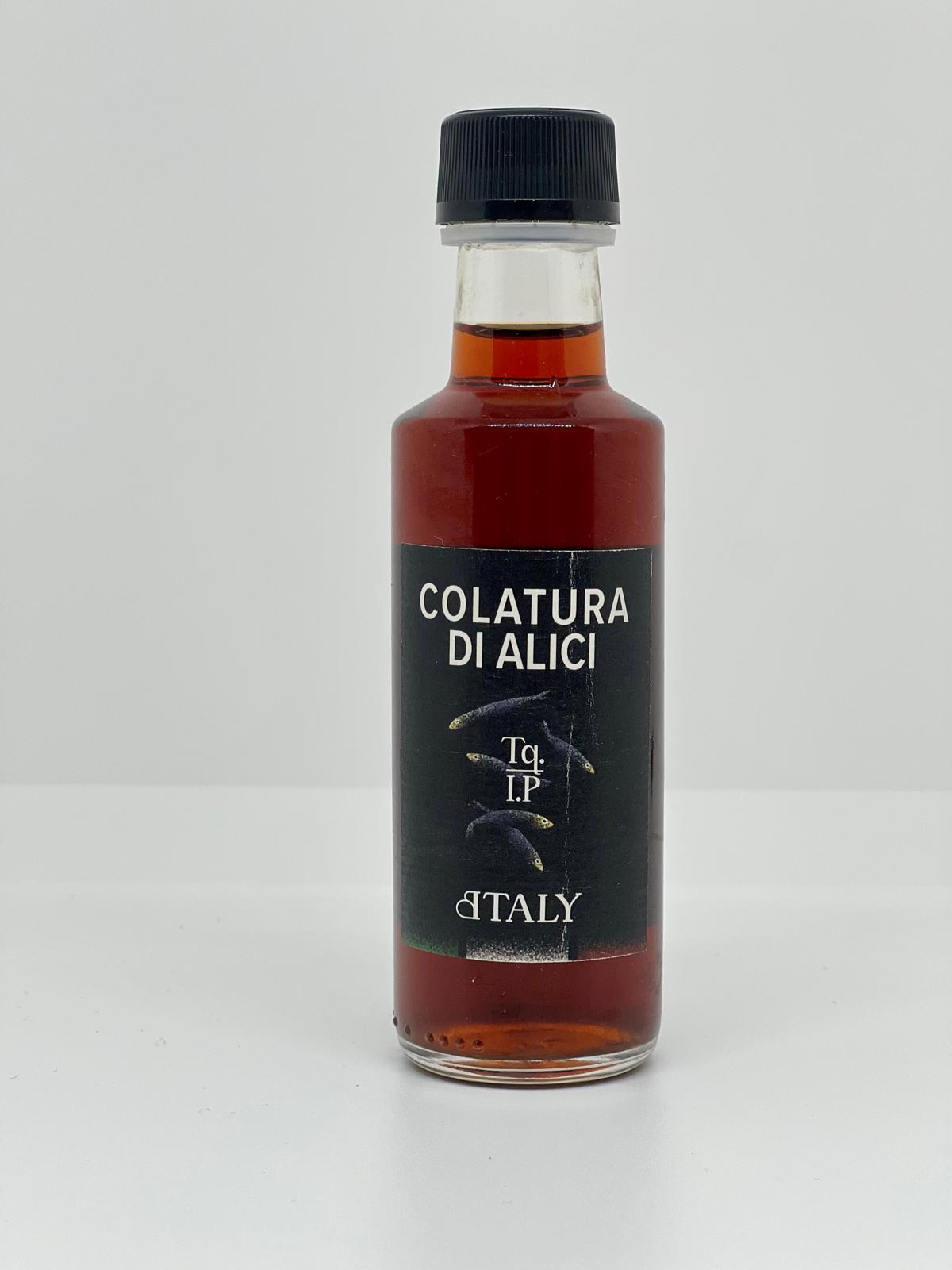
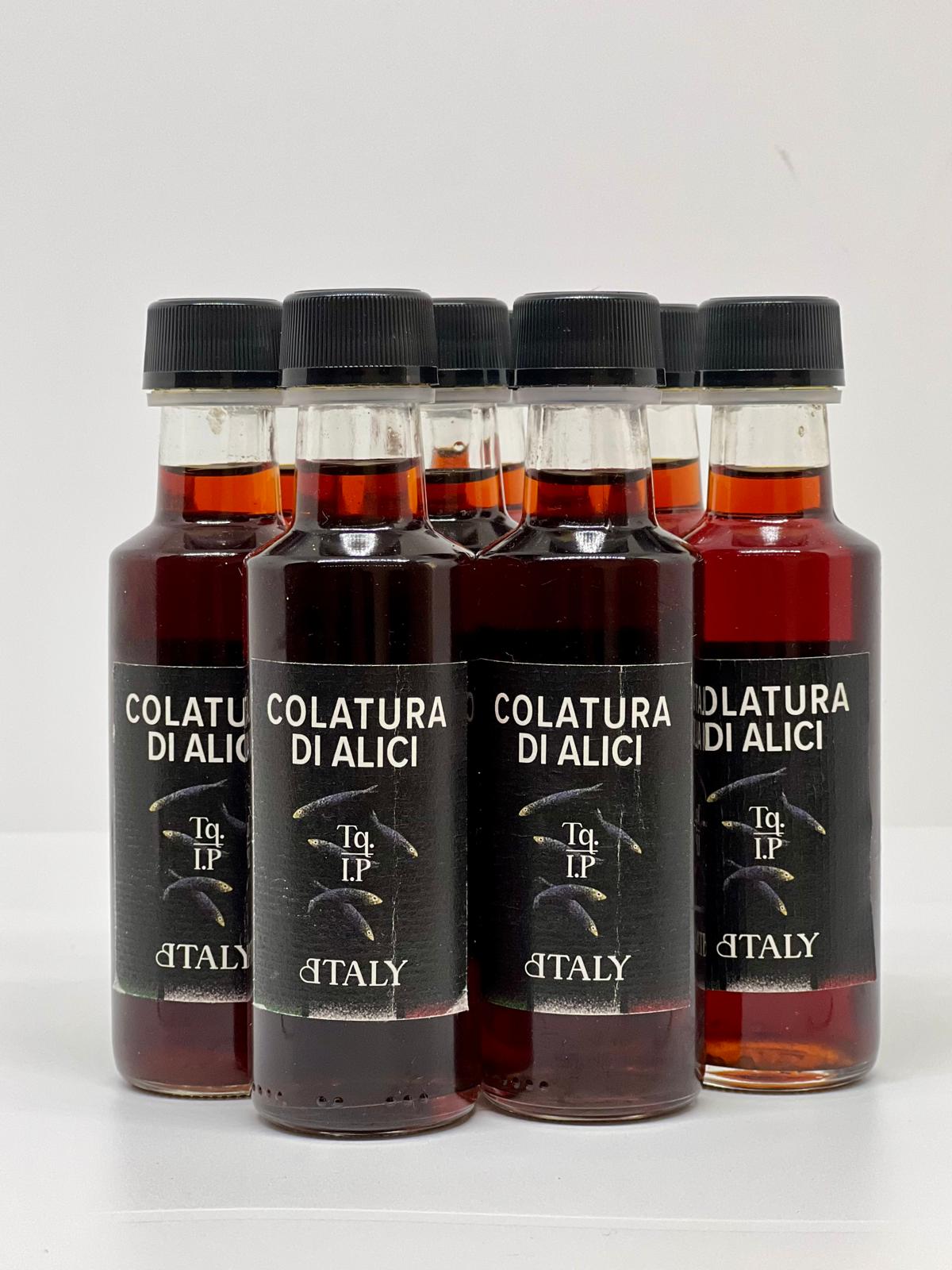
Colatura di alici (anchovy sauce), also a Slow Food Presidium, is an amber-coloured liquid obtained by processing anchovies that have been salted.
10 in stock
Categories: Fish derivatives, Fish products
Colatura di alici (anchovy sauce), also a Slow Food Presidium, is an amber-coloured liquid obtained by processing anchovies that have been salted. The fish used for this food process are fished from May to July. After being cleaned, they are immediately put into terzigni, the traditional wooden barrels used to preserve anchovies. It takes a few months to obtain this particular liquid, in fact the colatura will not be ready until December, in fact it is in the middle of the month that the Festa della Colatura di Alici is held in this area.
Colatura di alici di Cetara is a by-product of the preservation and production of anchovies. It is a product that requires experience and patience, two qualities that belong only to artisanal and certainly not industrial production.
The history of colatura is very old, it seems to derive from garum, an ancient condiment already used in Classical Greece and according to local tradition it is also linked to the monastic life of the monastery of San Pietro in Toczolo, a small village on the Amalfi Coast. It was these monks who, after fishing, cleaned the anchovies and placed them in layers with coarse salt in large wooden barrels to preserve them throughout the winter.
The excess liquid produced by soaking the fish in salt, which was deposited and dripped onto the bottom of the barrel, was very fragrant and one day the monk in charge of the kitchen decided to recover it and use it to season some vegetables. This was the beginning of the history of colatura di alici as a very tasty and salty liquid sauce, particularly popular right from the start in the local cuisine as a dressing for simple dishes and pasta, and which has now become an ingredient of excellence appreciated all over the world.
| Weight | 0,2 kg |
|---|---|
| Region of origin | Campania |
| producer | Damar Corporate S.r.l. |
| Zona di produzione / lavorazione | Castel San Giorgio (SA) |
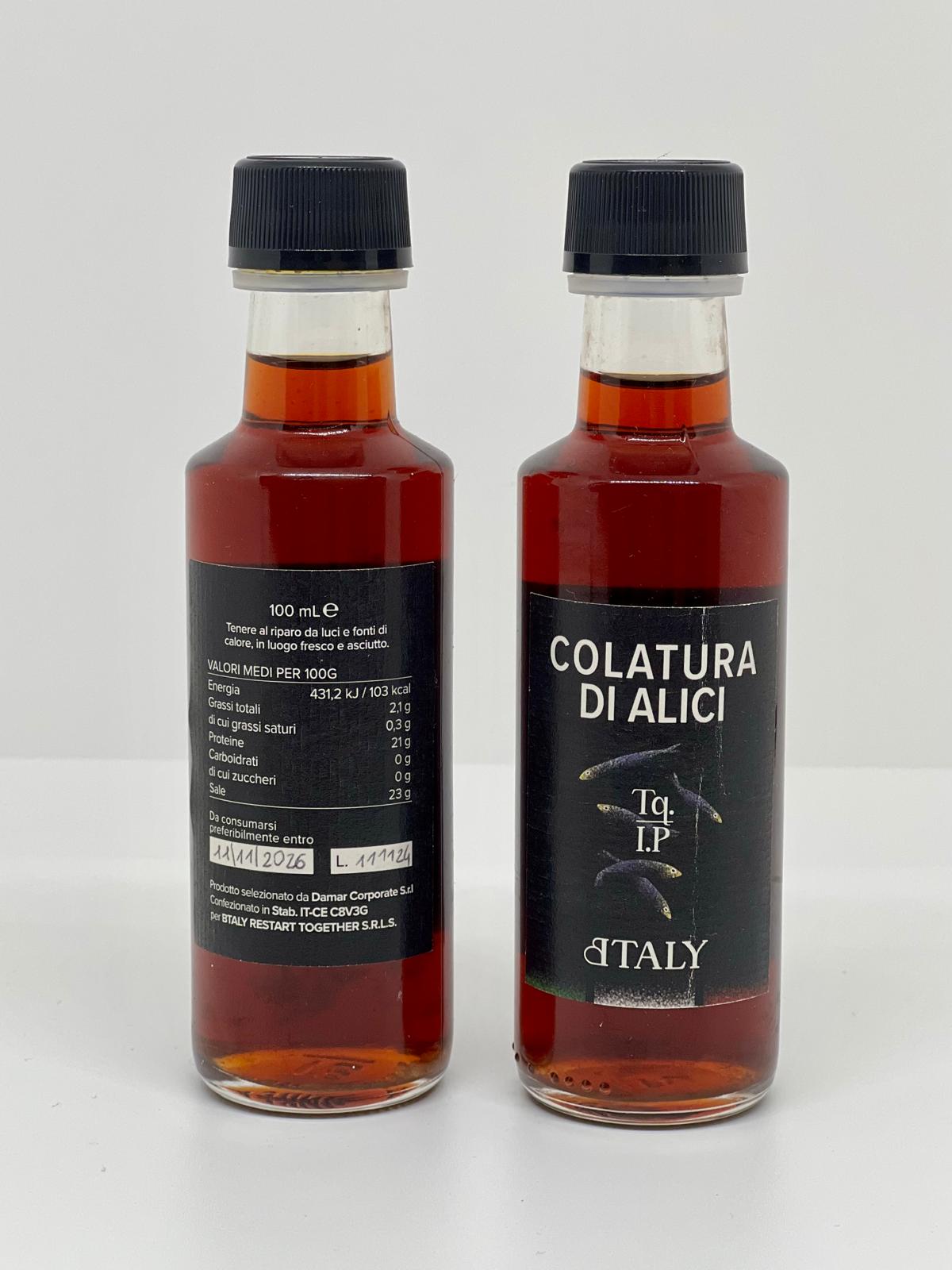
| packaging | 100 ml |
| Main ingredients | extract of salted anchovies |
| appearance | dense liquid |
| color | dark amber |
| smell | strong pungent |
| Taste | brackish |
| conservation method | Keep away from light and heat sources, in a cool, dry place. |
| Recommended pairings | As a condiment for pasta and risotto dishes. For example, they are excellent with Pici Btaly. |
| designation | Tq.I.P. |
| Expiration date | |
| smaltimento | Glass bottle and plastic cap; glass collection bottle and plastic collection cap. |
Nutritional values
NUTRITIONAL VALUES PER 100 ml:
ENERGY VALUE 431,2 kJ / 103 kcal
PROTEINS 21 g
FATS 2,1 g of which saturated fatty acids 0,3 g
CARBOHYDRATES 0 g of which sugars 0 g
SALT 23 g
The producer
Damar Corporate is a company located in Castel San Giorgio in the province of Salerno, a few kilometres from Cetara, the small town that over the years has become famous for its anchovies, which are among the most renowned in the world.
The company has created its own brand called “L’artigiano del mare” (The craftsman of the sea) and offers handmade fish products with no added preservatives. Their products are excellent to taste and are obviously processed according to the most ancient traditions of the Amalfi Coast.
Production area
Castel San Giorgio is a town of about 13,000 inhabitants in the province of Salerno.
It rises between the middle Sarno valley and the Agro lands, in the first inland of Salerno.
Inside the municipal territory there is Mount Castello, where the remains of an ancient castle dating back to the Norman era, built around the 12th century, are still preserved. It is a military architecture surrounded in ancient times by three thick walls and several watchtowers.
The origins of this town are ancient and date back to at least the 8th and 9th centuries AD. We find mention of this area for the first time in Roman times, since these lands were the scene of the famous Punic wars fought against the Carthaginian general Hannibal.
After the glorious times of the Empire, thanks to the courageous attempts of the inhabitants of the area to stop the Carthaginians, which earned them the respect of Rome, the territory was known in both the Middle Ages and the Renaissance by the name of San Giorgio. The prefix Castel only reappeared in 1800 following the unification of Italy, by royal prefectorial decree in 1863.
Italiano