Italiano



€22,00
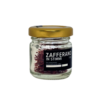
Saffron is a special spice extracted from the Crocus Sativus, a small, purple flower belonging to the violet family. It is a botanical variety native to Asia, but which has spread to Africa and southern Europe over the centuries.
Out of stock
Saffron is a special spice extracted from the Crocus Sativus, a small, purple flower belonging to the violet family. It is a botanical variety native to Asia, but which has spread to Africa and southern Europe over the centuries.
The Crocus, as it is commonly called today, was already known and used at the time of the Egyptians, and it is found even depicted in ancient papyruses. It was also very popular in ancient Greece and Rome, as the Roman poet Ovid mentions in The Metamorphoses, where he tells about the mythological origin of this flower that was even loved by the Olympian gods. In fact, it seems that, as Homer tells us in the Iliad, the king of the gods Zeus slept on a bed strewn with these little flowers with their yellow pistils.
It was the Arabs who introduced the use and consumption of this spice. Indeed, the term ‘saffron’ comes from Arabic Al Zafaran who brought it to Arab Spain.
Until 1700, saffron was the prerogative of the Kingdom of Spain, which, according to the laws of the time, it was the only country allowed to cultivate and export it to the Old Continent. It was brought to Italy thanks to a monk from Abruzzo, a botany enthusiast, who managed to steal some bulbs of this precious little flower and then cultivate it in his land.
Saffron is still today one of the most sought-after and appreciated spices in gastronomy. Its refined flavour can enhance many dishes without completely covering other flavours. This spice also has many beneficial properties such as being a natural antioxidant and an excellent remedy against stress and heart rhythm problems.
In the Italian culinary tradition, this yellowish spice is inextricably linked to rice, and it is from this combination that one of Italy’s most famous dishes was born: il Risotto alla Milanese.
Legend has it that its history is linked to that of the Milan Cathedral, a splendid architectural masterpiece of International Gothic taste. In fact, it was created in 1574 for the wedding of the daughter of a glassworker who worked at the Fabbrica del Duomo. It was on this occasion that for the first time someone had the idea of adding the precious yellow spice, used by glassmakers as a pigment to create yellow glass, to a simple butter risotto. The new dish was an immediate success, both because of its distinctive flavour and its bright colour, reminiscent of gold, giving a simple dish an allure of richness.
| Weight | 0,1 kg |
|---|---|
| Region of origin | Piedmont |
| producer | Azienda Agricola Roberto Obertino |
| Zona di produzione / lavorazione | VIA POGGIO, 2, 12077, Prunetto, Cuneo |
| packaging | 1 g |
| Main ingredients | Saffron |
| appearance | Stigmas of saffron |
| color | dark-red |
| smell | Saffron smells similar to hay and iodoform due to the molecules it contains, namely picrocrocin and safranal. |
| Taste | bitterish |
| conservation method | Store in a cool, dry place, away from heat sources. |
| designation | Tq.I.P. |
| Recommended pairings | Perfect for risotto alla milanese. |
| Expiration date | 31/12/2024 |
| smaltimento | glass jar with aluminium cap; the metal/aluminium collection cap and the glass collection jar. |
The producer
The Roberto Obertino farm is located in Prunetto, a small Cuneo municipality located in a beautiful valley between the Alps and the Apennines.
It is a small business since it is Roberto himself who runs it and takes care of everything, from cultivation to harvesting of saffron. He has always been passionate about botany and, for some years now, he has decided to get involved with this particular and precious golden spice.
Production area
Prunetto is a small municipality in the province of Cuneo with just around 400 inhabitants. Its ancient-origin name derives from the Latin term ‘Prunetum’, which literally means ‘a place where plum trees grow’.
The small village lies on the banks of the Bormida river, at an altitude of 700 metres above the sea level, located between the Apennines and the Alps, with Monviso in the distance.
As far as the origins of the Piedmontese municipality are concerned, we know that Emperor Otto I of Saxony (first King of Italy, and from 962, Roman Emperor) donated the small village and other surrounding lands to Aleramo, Marquis of Monferrato; Prunetto later became the seigniory of Bonifacio del Vasto and, in the 13th century, of the Marquis Del Carretto. The place was occupied and devastated in 1431 following the clashes between the Marquis Gian Giacomo del Monferrato and Duke Filippo of Milan. Then, it passed to the Scarampi marquisate becoming an imperial feudal fief and, in 1735, a possession of the Savoys.
According to some sources, the castle was built between the 12th and 13th centuries under the rule of the Marquis Del Carretto. It has a rectangular layout with an austere style dominated by towers (the oldest already existing in the 11th) positioned at the corners.
Today, the well-preserved castle is one of the main tourist attractions of the village, and it is included in the ‘Open Castles’ route that can be visited in Basso Piemonte. It often hosts cultural events, theatrical performances and exhibitions.
Another site of historical interest is the Sanctuary of the Madonna del Carmine, located near the castle. The sacred building dates back to the 14th century and, in its interior, some paintings from 1478 by the Monregalese painter Segurano Cigna can be found.
Related products